
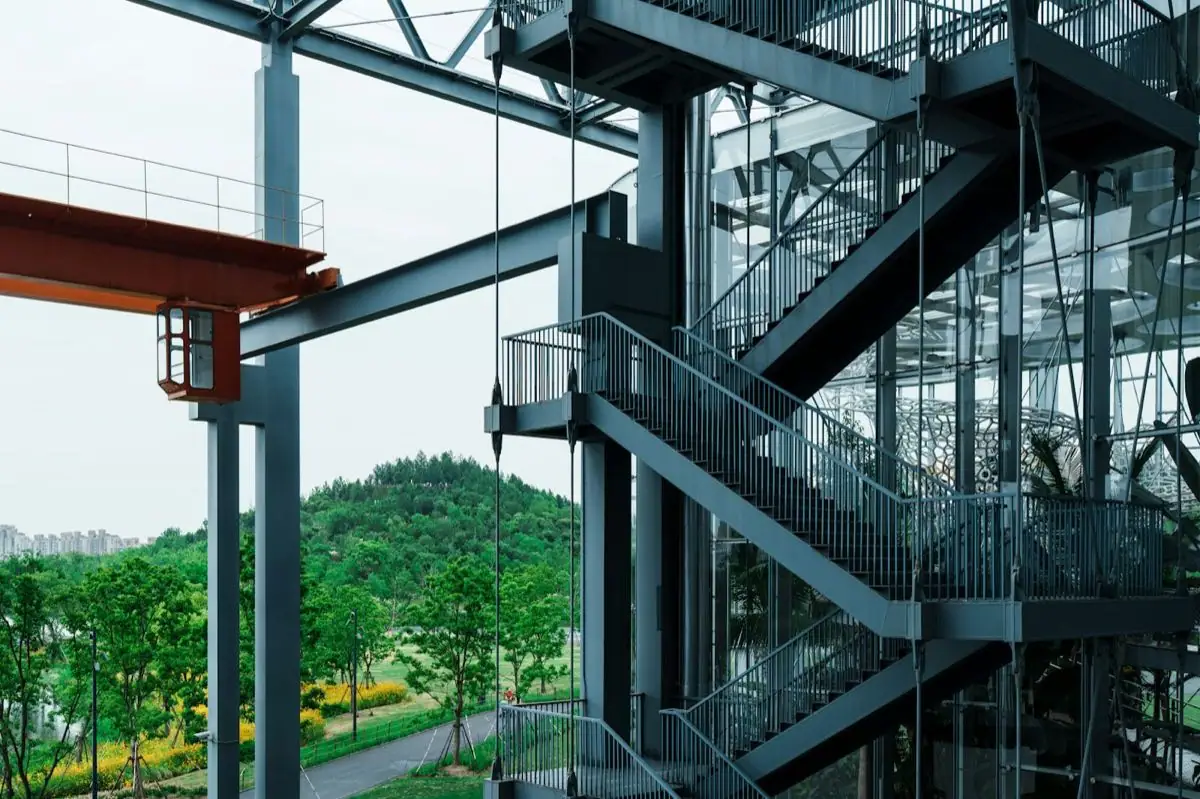
fire escape staircaseexternal staircaseCivil Defenceaccess ladderUAE
External Steel Fire Escape Staircases in the UAE: A Practical Guide
Adding or replacing an external fire escape stair? What Civil Defence reviews, design points, materials, and how a steel escape staircase is fabricated and installed.
Al Saqr Al Ahmar Welding and Blacksmith LLC3 min read
External steel staircases are a common way to give a building a second means of escape, to serve upper floors of warehouses and workshops, or to replace an old stair that has corroded. In the UAE, any stair that forms part of an escape route is reviewed against the UAE Fire and Life Safety Code by Civil Defence, so it has to be designed properly from the start. This guide explains what matters and how we build them.
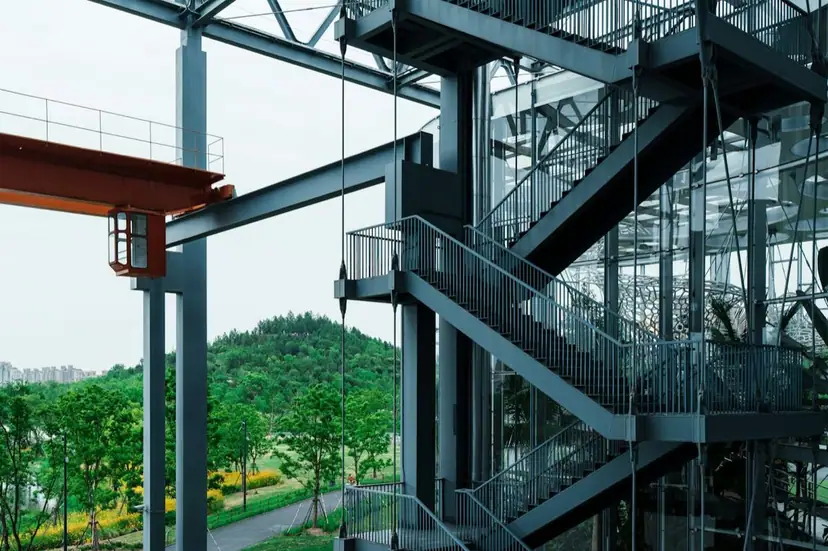
When you need an external escape stair
- A building extension or change of use needs an extra escape route.
- Mezzanines and upper floors in warehouses need a second way out.
- Civil Defence inspection has flagged an existing stair.
- An old stair has corroded and needs replacing.
What Civil Defence looks at
The consultant designs the stair to the UAE Fire and Life Safety Code and submits it for approval. The points that are always checked include:
- Width and capacity for the number of people using the route.
- Consistent risers and goings, and landings at the right intervals.
- Handrails and guards on open sides, of the required height and strength.
- Discharge: the stair must lead to a safe place at ground level.
- Protection from fire in the building it serves, such as the position of openings near the stair.
We fabricate and install to the approved design and supply the documents the consultant needs, such as material certificates and inspection records.
Design and material choices
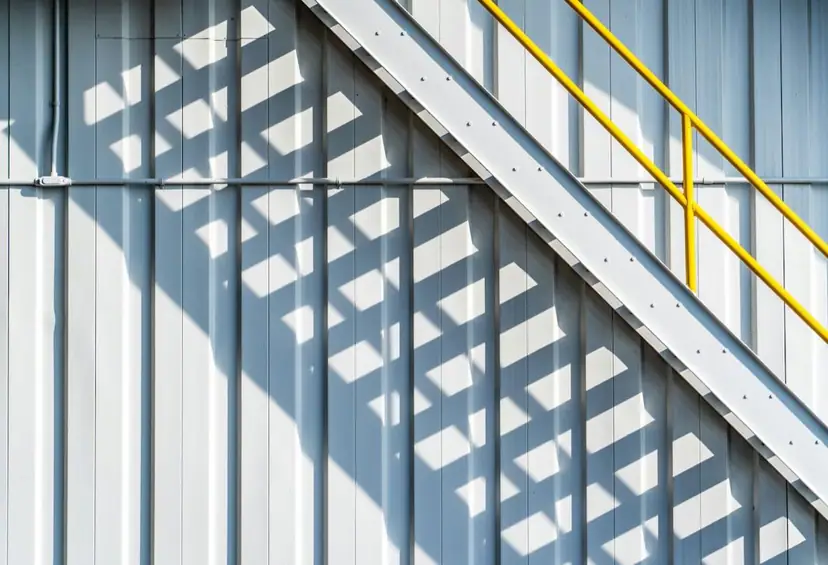
- Structure: steel stringers and landings, either self-supporting on their own columns or fixed to the building.
- Treads: galvanized serrated grating drains water and sand and gives grip.
- Protection: hot-dip galvanizing is the standard for outdoor stairs; add powder coat for colour. Coastal sites need a coating system to ISO 12944.
- Connections: bolted where possible so damaged parts can be replaced.
Access ladders for roofs and tanks
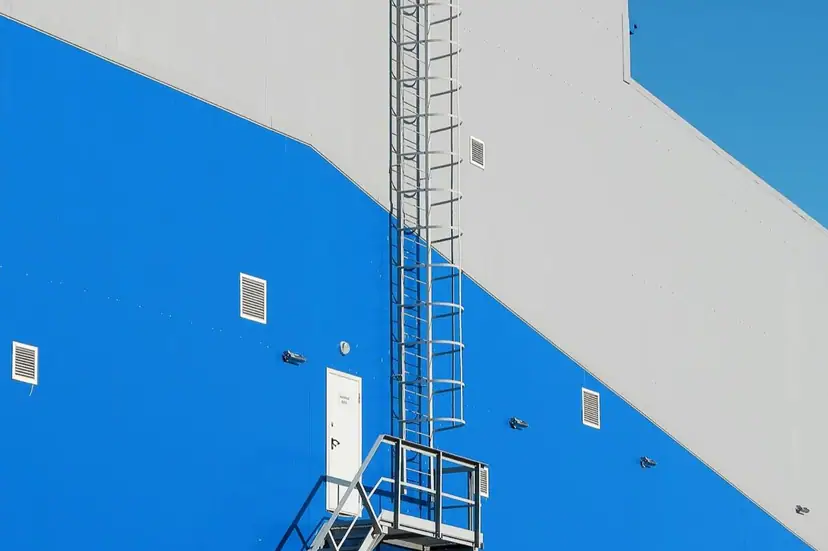
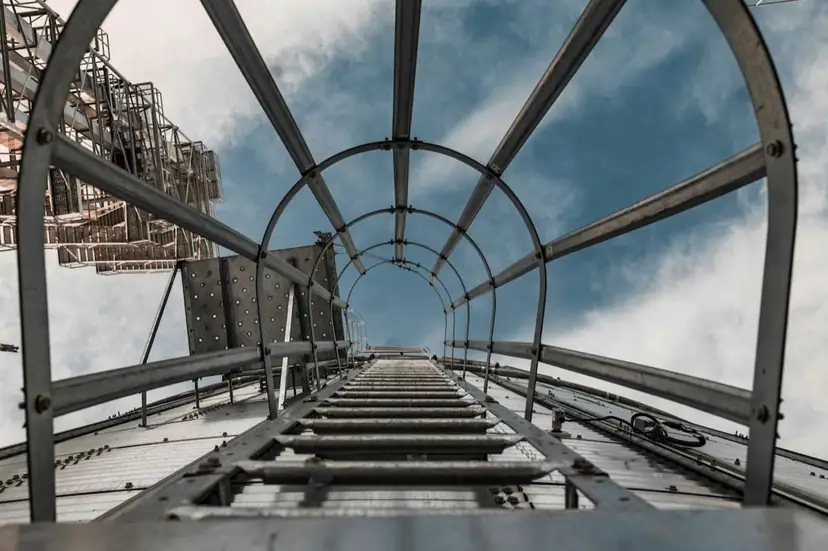
Where a stair is not required, fixed ladders give access to roofs, tanks and plant. Ladders above a certain height need safety cages or fall-arrest systems; your consultant or the site's safety team sets the requirement.
How we fabricate and install
- Site survey of levels, openings and the ground where the stair lands.
- Shop drawings from the consultant's approved design.
- Cutting, welding and inspection in our Musaffah workshop, then galvanizing.
- Installation in sections, often while the building stays in use.
Frequently asked questions
Can an existing escape stair be repaired instead of replaced?
Often, yes. Corroded treads, handrails and connections can be replaced if the main stringers are sound. We can inspect and advise.
Do you install while the building is occupied?
Yes. Sections are prefabricated so site work is short, and we plan around access and safety.
Can a spiral stair be used as a fire escape?
Only in limited cases set by the code. Read our spiral staircase guide and confirm with your consultant.
Need an escape stair or access ladder? See our steel structures service or request a quote with drawings or photos of the building.
Keep reading
More from the blog
6 November 2026 · 3 min read
Steel Sheds in the UAE: Types, Costs and Permits Explained
Storage sheds, workshop sheds, labour-camp sheds and open canopies: how steel sheds are built in the UAE, what drives the price, and which approvals you need.
5 November 2026 · 3 min read
Car Parking Shade Types in the UAE: Cantilever, Tensile, Pyramid and Steel Roof
Compare the main car parking shade designs used in the UAE, from cantilever and tensile shades to pyramid and steel-roof carports, and pick the right one for a villa or a car park.
4 November 2026 · 3 min read
Spiral Staircases in the UAE: Sizes, Design and Steel Fabrication
A spiral staircase saves floor space for roofs, mezzanines and villas. Learn the typical sizes, design rules, finishes and how a steel spiral stair is made and installed.