
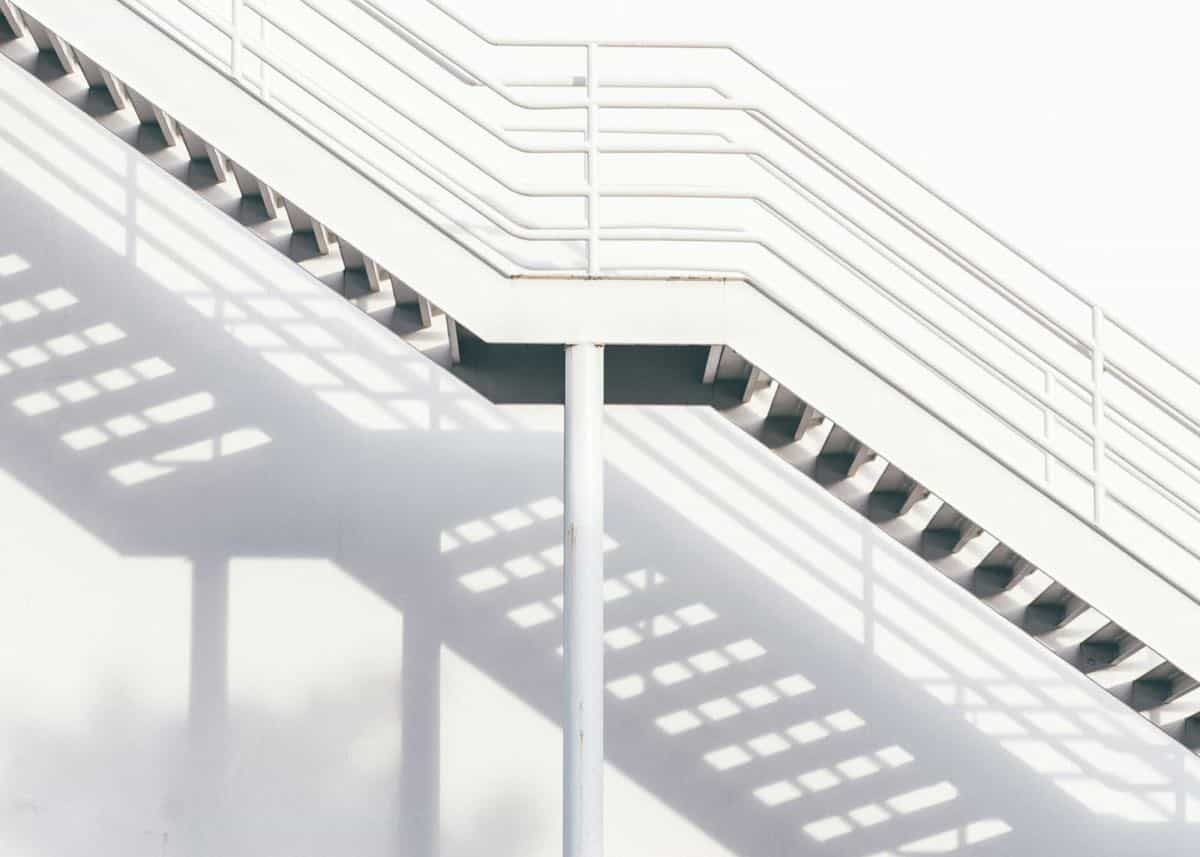
steel staircasehandrailsbalustradefabricationsafety
Steel Staircases and Handrails in the UAE: Design, Safety and Fabrication Guide
Straight, spiral, escape and feature stairs: design, safety, finishes and fabrication of steel staircases in the UAE.
Al Saqr Al Ahmar Welding and Blacksmith LLC2 min read
A steel staircase has to do several jobs at once: carry people safely, meet the building’s safety rules, fit the space exactly and look right. Steel is the material of choice for external escape stairs, mezzanine access, plant platforms and modern feature stairs in villas and offices. This guide covers the main types, design and safety points, finishes, and how a steel staircase is fabricated and installed in the UAE.
Common types of steel staircases
- Straight stairs – the simplest and most economical, ideal for mezzanines and platforms.
- Dog-leg and U-shaped stairs – two flights with a landing, saving floor space.
- Spiral stairs – compact access to roofs or upper floors where space is tight.
- External escape stairs – galvanized steel with grating treads, fixed to building facades.
- Feature stairs – mono-stringer or folded-plate designs with timber, glass or steel treads for villas and offices.
- Access ladders – fixed vertical ladders, with safety cages where required, for roofs, tanks and plant.
Key design and safety points
Stair geometry and guarding are controlled by the building and fire safety codes that apply to your project, and your consultant’s drawings take priority. The points every design addresses are:
- Consistent riser and going – every step the same height and depth so people do not trip.
- Width – enough for the number of users, especially on escape routes.
- Headroom – clear height above the stair line.
- Handrails – continuous, easy to grip, on one or both sides.
- Guards and balustrades – at the open sides of stairs and landings, with infill that prevents falls.
- Slip resistance – serrated grating, chequer plate or anti-slip nosings, especially outdoors.
- Load capacity – designed for the use, from domestic stairs to industrial platforms.
Treads and finishes
| Tread | Where it works |
|---|---|
| Galvanized grating | Outdoor, industrial and escape stairs; drains water and sand |
| Chequer plate | Plant rooms and workshops |
| Folded steel plate | Modern feature stairs |
| Timber or stone on steel | Villas and offices |
Outdoor stairs are usually hot-dip galvanized, often with a powder-coat colour on top. Indoor feature stairs can be painted or powder coated in any colour. Handrails near the sea are best in grade 316 stainless steel. See choosing steel for UAE conditions.
How a steel staircase is made
- Site survey – exact floor-to-floor heights and openings are measured.
- Shop drawings – stringers, treads, landings and connections are detailed and approved.
- Cutting and fabrication – stringers and plates are CNC cut, then welded and checked against the drawings.
- Coating – galvanizing, painting or powder coating.
- Installation – the stair is bolted or welded in place, levelled and finished.
Frequently asked questions
Can a steel staircase be prefabricated in one piece?
Smaller stairs often can, which speeds up installation. Larger stairs are made in sections that fit transport and site access.
Do you make handrails and balustrades separately?
Yes. We fabricate steel and stainless handrails, balustrades and guard rails for new and existing stairs, balconies and platforms.
Can you build stairs for an existing building?
Yes. We survey on site, prepare drawings and fabricate to fit. See our steel structures service and the fabrication showcase.
Need a staircase, ladder or handrail? Request a quote with the floor-to-floor height, available space and a photo of the area.
Keep reading
More from the blog
21 October 2026 · 4 min read
Steel Structure Cost in the UAE: 9 Factors That Decide Your Quotation
What drives the price of a steel building in the UAE, and how to compare fabrication quotations fairly.
21 October 2026 · 1 min read
Pipeline Welding for Onshore and Offshore Oil & Gas: An Overview
A look at what pipeline welding scopes typically involve — components, supports, clamps and pipe racks — and why fabrication quality matters for oil & gas facilities.
21 October 2026 · 1 min read
Why ISO 9001, 14001, 45001 and ADNOC ICV Certification Matter When You Hire a Fabricator
What ISO 9001, ISO 14001, ISO 45001 and ADNOC ICV certification actually verify — and why they should be on your fabricator shortlist checklist.